Ed Dewke's
Rebound Diary
Part 1 — January-February, 2004
(go
to Part 2)
Monday, January
26, 2004 - Why
I Know I’m Rebounding (My Immune System has Left the Building)
Tuesday, February
3, 2004 - Retrospection:
My First P; How Hate Grows
Thursday, February
12, 2004 - Foot
P, How Charming ... Hand P, Too ... Remembering Cyclosporine with
Affection
Saturday, February
14, 2004 - Meeting
a Young Old Wife
Wednesday,
February 18, 2004 - Topography:
From Dots to Continents
Tuesday, February
24, 2004 - On
Ears, on Changing Topicals, and a Weird Arthritic Reprieve
*****
Monday,
January 26, 2004
Why
I Know I’m Rebounding (My Immune System has Left the Building)
It’s been
four weeks since I’ve taken any systemic medication for my P.
The week between Christmas and New Years I stopped taking
cyclosporine, an oral immunosuppressive drug that does well clearing my
skin and keeping my psoriatic arthritis (PA) at bay.
But six weeks before that I’d started dropping my dosage on a
weekly basis. My normal dose
was 350 mgs a day and by Christmas I was taking 100 mgs a day and after
that I just stopped.
About the
second week in December all my P symptoms were returning.
Big lesion on my right knee and arthritic swelling obvious in that
knee. (Not so bad, though, as
it would have been were I not taking glucosamine/chondroitin as a daily
dietary supplement.) Big
lesion on my right buttock. Nine
of ten fingernails showing corruption at the cuticle, and inflammation in
the mantles of all fingers and thumbs.
Itchy scalp. Lesion
starting small above my navel.
I should be
into my third week of a 12 week course of Amevive right now, but that
didn’t happen because my CD4 helper T-cell count was way too low (111
and Amevive isn’t supposed to be used by anyone with a count below 250).
This caught everybody by
surprise. Ms A. (my derm-physician's'
assistant) called my radiation oncologist, Dr. M., to find out if my 25
days of radiation last year might have anything to do with it he said it
could. But more derms put
their two cents in on the subject and they suggested the fact that I’ve
been on immunosuppressive drugs without cessation for over two years might
have something to do with it.
What bothers me
is that there were no tests during those two-plus years to determine what effect
all my immunosuppressive drugs were having on me.
If CD4s — for example — are important, and these drugs I’ve
been on can wipe them out, why wasn’t there some concern to find out a
long time ago? (This is not to
suggest I didn’t have tests while undergoing methotrexate, Enbrel, and
cyclosporine therapies. Indeed,
I had blood work done almost every month.
But as far as I know, the performance of my immune system was not
the subject of inquiry. Rather,
they were looking for indications that there might be liver or kidney
damage.)
I went on line
and tried to figure out just how important my CD4s are.
After a couple of hours of largely over-my-head reading, I was
prepared to conclude CD4s protect us against “opportunistic
infection.” The HIV virus
either stops or wipes out CD4s, and a couple of readings pointed out that
counts as low as mine (111 at the lowest so far) are what they expect to
see when someone who has tested positive to HIV has finally decayed into
full-blown AIDS. That, I
thought, was pretty enlightening.
So it’s been
three weeks now since this Revelation about my CD4s.
I’m off all systemic P-medication and depending on topicals to
keep the skin lesions at bay. I
spend about an hour a day working clobetasol propionate ointment into my
finger tips, knee, butt, navel and growing collection of dime-sized
lesions here and there. I
found my medical forceps hidden in a rarely-used drawer the other day and
right away set to work peeling my largest lesion, the one on my right
knee. It’s been four or more
years since I did this last, but I didn’t have to think about it.
I hadn’t forgotten a thing. I
remembered perfectly how to look for the loose edges of the largest
scales, work the a pointy end of the forceps deep under the scale and
jiggle very gently to break it away without much blood.
But I didn’t remove any record-breaking scales.
I think the largest one I got off intact was about the size of a
dime. I remember times, ten
years ago, when I could peel skin scales the size of silver dollars off my
calves and I would tack these with push pins onto my bulletin board.
I remember some
controversy about the value of exfoliating this way.
One school of thought says never to “peel.”
When a lesion is moist, rub gently with terrycloth and be happy
with whatever comes off. Stop
if anything starts bleeding. But
I’ll tell you why I take the forceps and make a project of it.
The goop — in this case, the clobetasol propionate ointment —
is largely useless if it’s just smeared on top of scale.
It must hit the layers of skin that are still alive and growing too
fast and these, depending on the lesion, may be quite deep beneath the
outermost layer of scale. When
I have peeled down to bright red skin — beneath the white and yellow
scale — I know I have reached an area where the ointment can do some
good. And since I found the
forceps and peeled my knee, once more I have proven this to myself.
The lesion is still active, and I peel scale off it every day, but
it is far less inflamed than it was — the skin is salmon pink rather
than scarlet — which means the clobetasol is doing its job.
Tuesday,
February 3, 2004
Retrospection:
My First P ... How Hate Grows
My P first
appeared in 1990, when I was 39 years old.
For many months it was only on my scalp.
The first person to use the word “psoriasis” was a barber and I
didn’t think much about it. He
pointed me towards a few brands of shampoo that were supposed to help
“psoriasis” and I naively thought following his advice and using these
shampoos would take care of the problem.
Months passed. I developed a lesion on the tip of my nose.
This one finally drove me to a dermatologist.
As is so frequently the case for flakers, P wasn’t her first
choice diagnosis. First she
treated me for pre-cancerous skin cells on my nose.
This involved killing the lesion with super-cool gas and hoping the
nose would heal lesion-free. It
worked for awhile, then the lesion came back and I switched
dermatologists. This derm
looked at my nose, my scalp, and said “psoriasis.”
I’d heard the word twice, now.
I went off in search of information.
And became depressed.
It seems
identifying the demon enraged it. The
moment we started targeting treatment to P, it erupted with an
unimaginable magnificence. The
speed with which my skin turned from normal to grotesque was breathtaking.
It occurs to me, now, that it came then with all the strength and
speed of the rebound I’m currently experiencing.
First, all the
earliest lesions become hardened against whatever topical palliative I
use. This means they might
stop growing under the influence of the goop, but they don’t subside.
They remain inflamed and they flake — while new lesions crop up
everywhere. At first the new
lesions are red spots about the size of BBs.
Sometimes they are isolated, but more often than not they appear in
clusters, three to six of them within an inch or so of each other.
It happens on the calves and forearms first, then on the thighs and
upper arms, then on the back, chest and abdomen. The unknowing will say,
“It looks like measles.”
All these tiny,
colonial lesions grow rapidly. Those
that are clustered closely conjoin and form the big lesions that will
ultimately be the most difficult to clear — the lesions that cover
elbows and knees like yarmulkes. The
more isolated spots will achieve some indeterminate size — dime,
quarter, half-dollar — and then settle there.
Watching all
this occur now is a unwanted trip down Memory Lane, like returning to an
alley where, in childhood, you were beaten up by bullies.
The only thing different I bring to the party this time is
knowledge about how bad it’s going to get and the fruitlessness of all
the attempts I’m going to make to thwart it.
There is an
order to how we object to flaking, a hierarchy to our hatred of lesions,
and I imagine, though we all possess this, the details differ as
significantly as our gender and our personalities.
So in defining mine I’m attempting to build no case for anyone
else. My most hated lesions
are the ones that hurt or itch. The
next most hated are those that are most visible.
My attitude about all the other lesions borderlines indifference.
Thursday,
February 12, 2004
Foot
P, How Charming ... Hand P, Too ...
Remembering Cyclosporine with Affection
P on the soles
of my feet is much different than P anywhere else on my body.
I believe the P is active for quite a while before it is
noticeable, because it doesn’t turn into scale.
At first the skin just thickens.
I’ve thought about this and the only logical explanation I can
come up with (with no more real knowledge than I possess) is that the
pressure on the skin on the bottoms of my feet compacts the dead layers of
skin into leather-like calluses. Eventually,
where the dead skin is thickest, the outer-most layer turns whitish, and
though it still doesn’t scale, the color is the same as the fine scale
common to plaque lesions on knees and elbows.
It’s at this point that what’s going on becomes noticeably psoriasis.
First, the
thick white stuff showed up between my little toe and the next one on my
right foot. I could not see it
from the top and it was difficult to see from the bottom because the P
arthritis in my knee doesn’t permit me to hold my foot in my lap and
turn it over for many seconds at a time.
I discovered it while scratching my foot and peeling off about an
inch of this white dead skin between the toes.
Between the toes, these thickened plaques will slough off by
themselves because of the natural moisture and the abrasion that occurs
from walking. Once I saw what
had come off in my fingers, I took a closer look.
The whole outside edge of the bottom of my foot is one big lesion
and at the pressure points — ball of my big toe, narrow tendon just
outside the arch, and the heal — had developed the white patches.
I started to peal more from the patch I’d torn off between the
toes and it was, literally, like skinning my foot.
Two or three square inches of thick skin came off easily.
I knew I could peel the whole sole if I wanted to.
I recalled something else that I’d forgotten about foot P.
If you peel too much, the thinner, formerly unexposed skin beneath
will dry out fast and crack. And
cracks on the bottom of a psoriatic foot can be very painful.
So I stopped peeling where I could (without leaving dangling flaps
of skin). I used nail clippers
to cut away some rough edges around the peeled area.
But I stopped
peeling too late. By the next
evening the skin under where I peeled had cracked in two places.
Ah, now I remember. The
Joy of Foot
P!
I had an
appointment Monday of this week with Ms. A. (my derm-physician's
assistant). I showed her my
foot and most of the new blossoms on my limbs and remembered, while we
were talking, that the last time I had foot P this bad (which was several
years ago) I had occluded them overnight by taping 8 gal plastic trash
bags over a liberal application of topical corticosteroid ointment.
I asked her if she’d still recommended it.
She said sure, but also recommended something new.
It’s a cream called Vanamide (Dermik Laboratories, a Division of
Aventis Pharmaceuticals Inc.) and its active ingredient is urea (40%).
Yeap, this is stuff from our urine, a toxic product of protein
metabolism. (Years ago someone
emailed me and asked if I’d heard slathering pee on lesions helped.
I laughed in response. This
is why I swear never to dismiss anything as foolish!)
Here’s how
the Vanamide package insert describes Urea:
“Urea dissolves the intercellular matrix and thereby softens
hyperkeratotic [abnormally thick
horny layer of skin] areas by enhancing the shedding of scales.... For
enzymatic debridement [surgical
removal] and promotion of normal healing of surface lesions,
particularly where healing is retarded by local infection, necrotic [dead]
tissue, fibrinous [diseased
connective tissue] or purulent [containing
pus] debris, or eschar [hard
crust or scab]. [Bracketed
defining words looked up by Ed. Sorry
their inclusion here busts up the otherwise poetic rhythm of this package
insert prose.] The insert
for Vanamide goes on to actually recommend
using it under occlusion. They
say it is strong enough to soften ingrown toenails.
Had I not peeled away the necrotic,
fibrinous eschar accounting for most of the P lesion on my right foot,
I would have been tempted to occlude Vanamide on there last night or the
night before. As it is, with
the lesion now tender and cracked, I’m afraid a dose of Urea might
penetrate further than intended giving me dissolved
intercellular matrices in all the wrong places.
(Excuse me
while I take a minute to go wash the Latin out of my mouth....)
Last Spring,
when I was in the final three months of my uneventful Enbrel regimen, my
hands looked about as bad as they do now.
(It is amazing, on reflection, that six months of cyclosporine in
the Summer and Fall was able to completely clear them! Including the
nails!) One day last Spring I took my two oldest granddaughters to Dairy
Queen. We stood in line,
ordered our treats, picked them up and sat in a booth to eat.
A group of young people walked by us laughing.
Alexandria (age 10) said, “I hate those people,” and scrunched
her face up like only 10 year-olds can.
“Why do you say that?” I asked.
“Do you know them?” “They
were behind us in line,” she said, “and they were staring at your
hands and talking about how gross they looked.”
It seems like it took me way too long to come up with a response to
this. Finally, I said,
“Well, if those folks knew me, if they were familiar with my lightening
wit and charismatic personality, they wouldn’t pay any attention to my
hands.” To this, Stephanie
(also 10 years old) said, “What’s carey-spastic,
Papaw?” Alexandria added,
“If they knew you, do you think they would understand you?”
This incident added a new layer of stigma to the reality of having serious
hand P. I’m usually
super-conscious of my hands
when they’re flaming and I’m out in public, but my family is used to
it and when in the company of my kids and grandkids my P is ignored.
(Even I can forget about it in this company.)
Well, on this occasion, public and family were mixed.
I was caught up in the family (on a outing with my two
granddaughters) and oblivious to the public.
What I hadn’t realized would occur was their
stigma on my account. My
granddaughter was upset by the reaction of strangers to my hand P — even
though I hadn’t noticed that reaction.
And it occurred to me right away that this was worse — by a
considerable margin — than being stigmatized myself.
I suppose that
lesions on one’s face are worse, even, than hand P.
Ironically, my nose was the second place P showed up [see January
26 entry]. It had been in my
scalp for some time and then, before any of it had been properly
diagnosed, it showed up on my nose: a red lesion right on the end — very
Rudolphian. As I wrote earlier, the first derm I went to didn’t diagnose
P and my nose lesion was “burned off” with super-cool gas.
Not surprisingly, it returned quickly.
Once I started treating the face lesions as P, they proved to be
very responsive to topicals and, as a result, I haven’t had to live for
long periods wearing my disease on my nose, or my cheeks or my chin.
However, three
or four years into my tryst with P, symmetric lesions showed up on the
right and left of my chin, just above the jaw bone.
Both would grow fast to about the size of a nickel.
Sometimes it seemed this would happen over night!
I couldn’t be fast enough with my topicals to guarantee being rid
of these unsightly blemishes when I had to make appearances, so I grew a
beard. I wore that beard —
with only a couple of brief respites — for a decade.
I’ve no idea how often those two lesions were active beneath the
beard (they rarely itched), and it wasn’t until I’d been clear or
nearly clear for several years on the systemics that, in 2003, I finally
shaved it off.
As you might
expect, I’ve been paying close attention to my face during this rebound.
The nose has already flared and I’ve responded, as always, with a
mild topical corticosteroid that works very well.
The trick is not to over
use it. I must catch the
lesion early in its eruption if only one or two daily applications of the
steroid are to do the trick. Any
later and it will take up to a week to subdue the lesion.
Any earlier and too much healthy skin absorbs the steroid and,
eventually, will become immune to its palliative effect.
Every day when
I check for activity on my nose, I also check those places on the right
and left of my chin that once gave me so much grief.
I’m typing with one hand, now, while I pound on wood with the
other: So far, no chin
lesions.
Saturday,
February 14, 2004
Meeting
a Young Old Wife
An interesting
experience at my county public library today.
I’d taken grandchildren Stephanie (10) and Brandon (7) to the
library to get set up with library cards.
We’d stopped at the front check-out station where I picked up the
forms to fill out, then we headed up to the second floor so they could
browse in the young reader’s section while I filled out the forms.
(First challenge, the staircase.
Before my P arthritis I would have called such a staircase
“impressive.” Now the
better word choice seemed to be “brutal.”
One cannot appreciate a good banister until joint problems open
your mind.)
I sat at a
table while the kids browsed. I
did not notice the young lady sit down across from me.
I didn’t look up from my forms until she asked, “Is your sugar
low or high?” I’d guess
she was in her early twenties. Judging
from her clothes, she was a Pentecostal woman: long hair pulled tightly
back, ankle-length skirt. Long sleeves. Her inquiry shocked me because my
blood sugar had been higher than usual that morning.
But since when was this something noticeable by a stranger?
As a conversation opener, she picked a sure bet for me.
“Well, as a matter of fact, today it’s high,” I said, “but
how did you know?”
“Your
fingernails,” she said. “My
grandfather had high sugar and his toenails looked like your fingernails.
But I’ve known other people with low sugar and their toenails get
like that, too.”
“Actually,”
I said, “my nail problem is psoriasis, and I’ve had it for quite a bit
longer than my diabetes.” She
accepted my explanation most graciously and thereafter we spent several
minutes discussing other symptoms of hypoglycemia and diabetes.
Later, at home,
I spent an hour surfing the net for links between nail problems and
diabetes. I could find nothing
specific. Was it an old wife’s tale?
I decided to ask an in-law, my wife’s aunt who lives in the
mountains of Eastern Kentucky and has been a social worker in the hospice
field for many years. “Have you ever heard of anybody associating
corrupted fingernails or toenails with diabetes or hyperglycemia?”
“Oh yes,” she said. “It
can be a sign. I had a client
for nearly a decade who was bad diabetic, one of those whose blood sugar
would bottom out and then get super high all of a sudden, and his toenails
looked awful. He lived a long
time, though.”
I haven’t
been able to get this subject out of my mind.
In the fourteen years I’ve lived in Kentucky I’ve had probably
half-a-dozen occasions like this, where old grassroots erudition and
modern knowledge seem continents apart.
I was raised in a much younger State than Kentucky, and though
I’ve lived in many communities just as “old” as the Blue Grass,
I’d not “married into” any of those others.
Here I’ve married into a community with a long, rich and colorful
past. I’ve begun to think
that people of European ancestry, like me, born and raised in the western
United States, grow up with a palpable lack of history.
I’d never seen a gravestone with a date earlier than 1860 until I
moved East. I can think of
only a handful of things I was taught as a child that didn’t come out of
Reader’s Digests of the 1950s.
(The two most significant of those exceptions being to draw poison
out of a bee sting with a mud pack, and knowledge that it was possible to
make a chocolate cake without chocolate or
sugar.) Here and now is
different. It is not uncommon
to find in a “family section” of a cemetery, graves going back to the
1700s. People possess diaries
and paintings and letters that document their heritage that far back.
People still hold onto clothes and furniture “of museum age.”
I’ve seen in the poorest homes furniture that, with a little
restoration, would sell for thousands in finer antique stores. I think it
is from this rich and palpable history that connections like bad nails and
poor blood sugar control emerge.
And so what,
way back when, did people do when they finally decided that corrupted
nails probably meant poor blood sugar (“high” OR “low”)?
About the only thing they could
do was modify their diet. That
means they probably ate more or less sweets, and they probably consumed
greater amounts of natural things — plant parts and extracts — that
were believed to have curative powers.
They probably bought and tried all sorts of snake
oil, too. And for some of
them, some of it worked, some of the time.
It must also be noted that living to be 60 was considered a feat.
Death in one’s late forties or fifties meant a long life had been
lived. And if, having been
married as a teenager, that long life produced many children and many more grandchildren, well, that person ought not complain.
Wednesday,
February 18, 2004
Topography:
From Dots to Continents
There are
several one-liners in the FlakeHQ “Don’t Say This” collection that
refer to playing connect the dots
with one’s P lesions. It’s
also been mentioned in several emails through the years.
I think, for some people, when they are flaming there are dozens of
coin-sized (or smaller) lesions on their limbs and torso.
For me, though, that particular topography is an intermediate
stage. I’m in it now.
Do you recall
seeing in magazines or on TV some of the high-resolution, high-altitude
photographs of islands in the Earth’s oceans?
Remember how, from that perspective — looking straight down from
on high — it is so obvious that the above-sea-level islands are only the
peaks of submarine mountains that spread out beneath them until their
color blends into the dark blue of the ocean depths?
Those photographs remind me of what I look like now, when I’m at
the connect-the-dots stage in my P rebound. The submarine mountains come in shades of
blue and green; my P lesion landmasses come in shades of red.
Consider my
calves. When I try to remember
the worst my P has ever been, I recall a large lesion on each of my
calves. These cover the back
part of the calves from just above the ankle to just beneath the backside
of the knee, and each wraps around its leg about 160 degrees.
They itch fiercely, and since the itch cannot be completely
ignored, I irritate these lesions and that’s part of what makes them so
hard to treat. Their location
makes them easy to pick at, so I peel the scale off of them when I’m
wasting time. While this may
enable my topical medicine to work a little better, you wouldn’t know it
because the peeling irritates the lesion, inflaming it more, giving it
strength to resist the palliative effect of the topical drug.
So it’s a vicious circle, and I play it with all the instinctive
regularity of the lowest mammal on the food chain.
Me and my lesions: Keeping
mutually destructive company in perpetuity.
In fact, these
humongous, calf-covering lesions are the eroded plateaus of a rugged
subsurface landscape that first emerges as dozens of smaller scaly
“islands” in the oceans of skin on my calves.
Watching this happen — a process that takes between two and three
months (unless something is done to quell it) — is to observe a
simulation of the emergence of land masses from the primordial Earth’s
ocean.
First there is
the coming of the islands. One
... another ... then several usually rather close together.
This is the connect-the-dots
stage. This morning I
count sixty-three islands on my left calf, at least thirty of them in two
large clusters.
Then the sea of
normal skin between and around the tightest clusters of islands begins to
change, to redden. This is
when the calf resembles a satellite photograph of an island cluster in any
of Earth’s oceans. You see
the “islands” you have been counting in that cluster are merely high
knolls on a larger land mass that is just now emerging from your skin’s
depths.
The emergence
of the larger land mass happens quickly, in a week or two.
The reddish outline continues to darken and then thicken (as though
it were rising up out of the skin) and soon the earlier dot-sized lesions
can no longer be distinguished. A
cluster of islands has become a continent.
The continent
quickly takes on its own characteristics.
Different continents will slough the dead skin (cells being
replaced 14 times faster than normal) in different ways.
In some places the dead skin won’t scale, but stays compacted and
builds up into a hard, whitish, scabrous substance that can be chipped
away and bleeds easily. In
other places, the continents form yellowish scales with defined edges
(where natural exfoliation is separating the dead tissue from the rest).
You can plunge fingernails or tweezers under the edges of this
scale and peel it away. Sometimes,
pin-point bleeding will occur. Another
kind of continent won’t scab or scale, instead it stays supple and
becomes covered with raised pimples
that make one suspect pustular P, but it isn’t pustular when the pimples
aren’t filled with fluid. This
kind of continent reminds me of the skin on horny toads.
In my own case, these continents are often the oldest — meaning
they were among the first to form — and the most treated with topical
corticosteroids. In fact,
I’m inclined to think this peculiar topography might be a consequence of
the steroids. Such lesions can
neither be chipped nor peeled. Scratching
the pimples merely tears them away and they are sure to bleed.
But there is one benefit, this kind of continent-lesion, in my case
at least, doesn’t itch.
Today the
massive continent which will be a single calf-encompassing lesion on my
right leg is visible but still largely submerged.
Many of the clusters of islands have already merged, but I see from
the larger salmon colored area beneath all the scaling islands that the
massive continent is merely weeks away.
The same is
true for the right calf, but it is perhaps a week behind the left in its
formation. There are still
clusters of islands on the right — only a couple are conjoined — and
the outline of the massive continent is still very dim.
I think if I
were to start on cyclosporine today (which I can’t, this is purely a
musing) the continent on my left leg would never fully emerge, but the
continent on my right would see dry air for a brief time.
Cyclosporine is, for me, a P continent preventative and killer.
Taking the proper dosage of cyclo will reverse the creation of
these huge lesions in a matter of weeks.
They will disappear faster than they emerged.
Methotrexate works nearly as well but, sometimes, it cannot ever
completely tame the most recalcitrant continents.
They may dwindle but never entirely disappear.
Contemplating
improvement is depressing me. Enough
for now.
Tuesday,
February 24, 2004
On
Ears, on Changing Topicals, and a Weird Arthritic Twist
A few days ago,
when I removed my finger from my ear a comet’s tail of flakes came with
it, dusting my collar and shoulder with the old familiar detritus of ear
P.
Hm.
My ear must have itched. Why
else would my finger have been in there?
Truth is, ear P has never been one of my serious complaints though,
come to think of it, whenever I’m flaming widely I’m bound to have it.
I think the
truth is I’m somehow consciously “turned off” to the sensation of
itching in my ears, but I respond to it subconsciously.
I do it and don’t know it. I
didn’t know why my finger had been in my ear — would no doubt have
never remembered it being there — until that comet’s tail of flakes
brought my attention to it.
So now I know.
I’d have just as soon not been reminded.
A derm was the
first person to bring my ear P to my attention.
He was trying to get a handle on how widespread the problem was
and, at some point, he said, “Let’s take a look in your ears.”
A millisecond after he stuck the probe in the first ear he went,
“Yeap. In there, too.”
It means
another medicine. For me this
has always been fluocinonide solution, a corticosteroid in an alcohol
base. (Dermacin and Lidex are
two of the well-known brands, but I buy it as a generic.)
I apply it to the inner ear by soaking a Q-Tip with it and swabbing
thoroughly. (Once a day,
though twice is recommended.)
Even during a
vicious rebound, I don’t think my ear P ever gets too bad.
For example, some people have a collateral problem stemming from
their ear P: The flakes mix
with earwax and form a hard compound that plugs their ear canals.
Hearing efficiency diminishes – like listening to the world
through a piece of sheet rock.
Other people
have bad P in the folds of the outer ear.
I’ve gotten it there occasionally — and do feel the itching
when it’s there — but so far, this rebound, it hasn’t crept out.
Here’s an
advance notice for younger FlakeHQ readers (those under 40):
As you get older, what comes out of your head’s orifices matters
more to you and is usually more consequential.
Quasi-appendages
like your nose and your ears are likely to continue to grow slightly after
the rest of you has stopped growing. Someone
with normal (meaning usually unremarkable) ears may find at sixty they
look like Dumbo. The cartilage part of your nose can grow like your ears,
and it’s shape may change slightly.
Again, a particularly normal nose on a 30 year old might bloom
nostrils big enough to be airplane hangers by fifty-five.
A person can be self-conscious about these little (big) things.
That self-consciousness can become full-blown stigma when things
like hair and flakes
start to flourish with untoward lushness in these places.
(No one likes
nose hair. People spend money
on every new device advertised to make short work of nose hair.
Few people remain blind to their own nose hair problem for long
because our society does shun it and you can’t help but wonder what
people are staring at that resides two to three inches below your eyes.
The exception is men with bushy mustaches.
Nose hair tends to get lost in bushy mustaches.
I know. When I shaved
my mustache I discovered a crop of nose hair that was horrifying.
For years I’d occasionally watch barbers take a few swipes at my
mustache with their electric clippers then frown, set down the clippers,
pick up the pointy scissors, return to the general area, snip snip, then
move on. Now, shorn of
mustache, I cannot go back to those barbers. And I am collecting all sorts
of devices for trimming nose hair.)
*****
Last week it
was time for me to make a switch between my clobetasol propionate (a.k.a.
Temovate) and betamethasone dipropionate (a.k.a. Diprolene).
These are both considered strong topical corticosteroids.
Back before I
used any of the systemic drugs for psoriasis I was totally dependent on
topicals to manage the disease. My
derm told me at that time, “We need to establish you on a revolving
regimen of different topicals, from potent to not-so-potent, to keep your
skin guessing. If you just
stick with one thing it will wear out.
It will stop working.” So
I’d use one kind of topical for as long as it took to exhaust a large
(60 gram) tube, and then I’d switch to another.
Temovate and Diprolene were the two most potent corticosteroids in
my revolving regimen at that time.
Within three
days of using the betamethasone dipropionate I could see an impressive
difference in some of my lesions. It’s
true — at least it is for me — that the lesions just become resistant
to anything I put on them. Given
time, they will learn to ignore anything.
And it takes long enough for this to happen that I am unwilling to
blame it on the medicine. Quite
the contrary, my natural instinct is to slather on more
of the medicine and this, of course, just speeds up the lesions’
resistance to it. But I had
forgotten about most of this, at least consciously, until three days into
the betamethasone. The lesion
that shocked me the most was the bumpy one covering my right knee (under
which lives the psoriatic arthritis).
Wow! It had diminished
from red to salmon color, except for the bumps, which were still red, and
I’d swear it was smaller, that the edges were closing in.
This was the most obviously improved lesion, but on inspection I
found several others that looked better.
For me this is
a bittersweet news. Now that
I’ve experienced it, again, I remember what it really does and doesn’t
mean. It doesn’t mean I’m “on the mend.”
Indeed, it would be quite surprising if any lesion subsided
completely under the betamethasone. No,
what I’ve done is temporarily shocked
them into submission — a little.
I’m still looking at a large portion of my 60 grams of
betamethasone dipropionate that is going to get slathered on these lesions
over the next couple of weeks and, if experience proves true, my lesions
will become familiar with it
quickly, then set about working on the strength of their resistance to it.
Probably as early as next week I’ll see this momentary
improvement start to backslide. I
won’t know exactly when I return to as bad as I’ve been, and I don’t
know if I’ll get worse.
But I do know
that it is not in the nature of my P to submit to the palliating
influences of topical corticosteroids.
I don’t know how bad things would get if I did not use them.
It knows that I don’t know this. So
we play this expensive game. I
spend and work to hold it back, to think that I am being proactive; it
goes about its life perturbed but far from mortally wounded.
It gives me my noticeable moments of progress, but then it takes
them away and shows me how in command it still really is.
*****
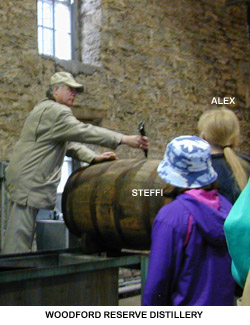 Granddaughter
Stephanie has enlisted me to help with a project for her fourth grade
social studies. She (and each
of her classmates) has been tasked to create a “Kentucky Scrapbook.”
The assignment is detailed enough that they were given a typed list
of things needing to be represented in this scrapbook.
Of course, (and I’m sure this is in deference to the parents and
grandparents who’d be helping their offspring with this project)
considerable latitude of interpretation is permitted.
“Creativity” in filling the pages will earn huge rewards
(according to the syllabus). Granddaughter
Stephanie has enlisted me to help with a project for her fourth grade
social studies. She (and each
of her classmates) has been tasked to create a “Kentucky Scrapbook.”
The assignment is detailed enough that they were given a typed list
of things needing to be represented in this scrapbook.
Of course, (and I’m sure this is in deference to the parents and
grandparents who’d be helping their offspring with this project)
considerable latitude of interpretation is permitted.
“Creativity” in filling the pages will earn huge rewards
(according to the syllabus).
I approached
the assignment like a project (always trying to enhance a child’s
educational experience in all ways possible, but primarily in
demonstrating an adult approach to the problem), and our first exercise
was to “plan” how we would go about finding stuff for the pages.
One thing led to another and it was decided that, over the next six
weekends, we will take a series of road trips to acquire experiences and
photographs to put in the scrapbook. This
past Saturday was our first.
Papa Ed and his
psoriatic knee, took Stephanie and cousin Alexandria to the Woodford
Reserve Distillery, to Ashland, home of Henry Clay, and then to Henry
Clay’s monument in Lexington Cemetery. That morning was the first time I
thought about how much walking all this might entail.
I really had no idea. What
it proved to be was bad planning.
 The
Woodford Reserve Distillery required walking through three buildings,
climbing up 20 and down 93 steps (rather than climb up some I took a van
with the other oldsters) and I was on my feet about an hour.
Ashland was another hour on my feet and several flights of stairs
up and down inside the home and out. Plus
walking the grounds to visit outbuildings, getting to and from the car in
the parking lot. And, at the
cemetery, the closest we could park meant hiking up (and then back down) a
steep but stepless hill to the Clay Crypt and Monument. The
Woodford Reserve Distillery required walking through three buildings,
climbing up 20 and down 93 steps (rather than climb up some I took a van
with the other oldsters) and I was on my feet about an hour.
Ashland was another hour on my feet and several flights of stairs
up and down inside the home and out. Plus
walking the grounds to visit outbuildings, getting to and from the car in
the parking lot. And, at the
cemetery, the closest we could park meant hiking up (and then back down) a
steep but stepless hill to the Clay Crypt and Monument.
By the time we
got home I was limping severely and hurting mightily.
Rest that night was tough. Getting
up to go to the bathroom was tougher.
Sunday I made only one trip up to my attic office and came down
quickly, using the butt on steps routine that my two year old
grandchildren have been taught by their mothers.
The majority of the day I spent on the living room couch, legs up,
watching TV. I dreaded Monday
(yesterday) for knowing I’d have to go up to the office and come down several
times.
But then nature
called about 2:00 a.m. Monday morning and I was halfway to the bathroom
when I realized nothing hurt too significantly and my limp was barely
occurring. Back in bed I did a
couple of knee lifts and couldn’t believe it.
Twelve hours before I had to use a hand behind my right knee to get
it to go anywhere. I slept
fitfully for a few more hours — but not because of pain.
Why did my PA
so suddenly diminish? Monday
was a miracle day, I moved with complete freedom anywhere I wanted, in and
out of the house, up and down stairs, around town....
No, the knee was not “cured” but the PA hadn’t been this
insignificant for months. It
was like time had shifted back to the weeks when I was being weaned off
cyclosporine, weeks when I was just beginning to feel the PA again.
What had I done to bring this reprieve about?
Of course, the
first thing to think about is Saturday.
My psoriatic knee got a tougher workout that Saturday than it had
ever gotten during a flame time. While
I, like everybody, have experienced the truth in the old adage no pain no gain, I’ve never known it to apply to arthritis.
Quite the contrary, typically for me a stressed arthritic joint
only gets worse until time dilutes the stress.
(On the other hand, I do know the value of keeping an arthritic
joint limber by exercising it when it is not hurting.)
Another
possibility: Upon coming home
Saturday and explaining my predicament to Clara, she suggested I forgo the
Tylenol/Ultram combination I had been taking for pain and switch to a
prescription-strength dose of ibuprofen.
Might this have acted on my arthritis pain the way switching to
betamethasone dipropionate has acted on some of my skin lesions?
Well,
I’m only working on my second day after my Sunday Disablement, and
though I’m appreciative of the fact that so far, today, the pain is
staying low, it’s probably too soon to jump to conclusions.
(Go to Part 2)
Return to Articles
www.flakehq.com |
 Mar-Apr
'04 | briefing |
mail | don't
say this |
flakers' jargon | flaker
creativity | articles | other
places | archives | send
mail | ed dewke | legal
stuff
| order | search |
©2001 Ed
Dewke
Mar-Apr
'04 | briefing |
mail | don't
say this |
flakers' jargon | flaker
creativity | articles | other
places | archives | send
mail | ed dewke | legal
stuff
| order | search |
©2001 Ed
Dewke